

Why place matters in crowdfunding
Most crowdfunding platforms are global by default. A neighborhood raise works on completely different fuel.
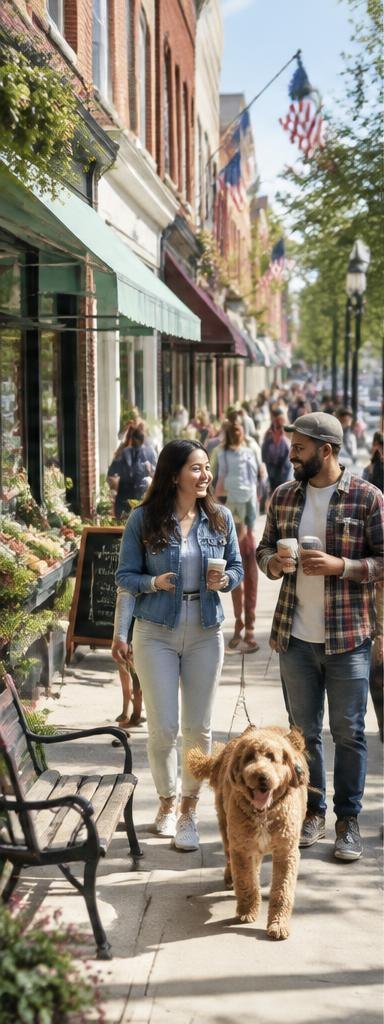
Most crowdfunding platforms are global by default. A neighborhood raise works on completely different fuel.
This guide is for an owner or community member deciding why a locally organized campaign deserves a different strategy from a global product launch. The objective is to use proximity, recognition, repeat visits, and local networks as campaign strengths. That requires more than a persuasive headline: the plan should be understandable, costed, and usable by the people responsible for carrying it out.
The guidance below separates the decision from the promotion. It explains what to prepare, how to test the plan, what can go wrong, and what to do next. Examples are illustrative unless they describe Pledzy's published fees or workflow.
Quick answer: Global platforms reward novelty
A product that can ship anywhere competes on originality against everything else on the internet. A café competes for the attention of people who live within about two miles of it.
Quick answer: Local raises run on recognition
The strongest reason anyone gives is 'I go there'. That is why Pledzy organises every campaign into a city and state hub — so a page can be found by the people for whom that sentence is true.
Quick answer: It changes the rewards too
A tier that requires walking in the door is a feature locally and a dead weight globally. Use it.
Local relevance changes the audience
This guide is for an owner or community member deciding why a locally organized campaign deserves a different strategy from a global product launch. The objective is to use proximity, recognition, repeat visits, and local networks as campaign strengths. That requires more than a persuasive headline: the plan should be understandable, costed, and usable by the people responsible for carrying it out.
A useful way to test the idea is to ask what a careful reader could verify without already knowing the owner. The answer should come from the project, the numbers, the images, and the terms—not from urgency alone. For example, a neighborhood café does not need worldwide novelty; it needs nearby people to understand the project, visit the location, redeem rewards, and tell others.
Recognition is useful evidence
Move in sequence and keep a written record of each decision. A sequence prevents one attractive part of the campaign—usually the headline or reward—from getting ahead of the budget and operating reality.
- 1
Step 1: Name the city and neighborhood clearly
Complete this before moving on. Record the person responsible, the evidence used, and any assumption that still needs confirmation. If the answer changes the budget, timeline, or reward promise, update those connected parts at the same time.
- 2
Step 2: Show landmarks only when they help establish the real location
Complete this before moving on. Record the person responsible, the evidence used, and any assumption that still needs confirmation. If the answer changes the budget, timeline, or reward promise, update those connected parts at the same time.
- 3
Step 3: Offer pickup, events, or experiences that reward proximity
Complete this before moving on. Record the person responsible, the evidence used, and any assumption that still needs confirmation. If the answer changes the budget, timeline, or reward promise, update those connected parts at the same time.
- 4
Step 4: Map customer, partner, and community touchpoints
Complete this before moving on. Record the person responsible, the evidence used, and any assumption that still needs confirmation. If the answer changes the budget, timeline, or reward promise, update those connected parts at the same time.
- 5
Step 5: Keep broader online outreach tied to the local story
Complete this before moving on. Record the person responsible, the evidence used, and any assumption that still needs confirmation. If the answer changes the budget, timeline, or reward promise, update those connected parts at the same time.
Design rewards for proximity
Consider this practical scenario: a neighborhood café does not need worldwide novelty; it needs nearby people to understand the project, visit the location, redeem rewards, and tell others. The point is not to copy the numbers or offer. It is to show how the promise, evidence, costs, audience, and delivery plan should agree with one another.
A worked example should make tradeoffs visible. If one line changes, revisit the connected goal, schedule, and communication rather than allowing the public page and operating plan to drift apart.
| Part of the plan | What it should show |
|---|---|
| Discovery | City and state hub |
| Recognition | Real storefront and owner photography |
| Participation | Pickup, event, or local-service reward |
| Follow-through | Post-campaign proof visible to the same community |
Document the decision before you publish
Create a one-page working brief that states the audience, the intended outcome, the evidence, the main constraint, and the person responsible for the next action. For this topic, that means writing for an owner or community member deciding why a locally organized campaign deserves a different strategy from a global product launch and keeping the central outcome visible: use proximity, recognition, repeat visits, and local networks as campaign strengths.
The brief is not campaign copy. It is the record behind the copy. Attach quotes, calculations, policies, photographs, delivery assumptions, or professional advice where they apply. Mark what is confirmed, what is estimated, and the date each estimate was checked. When a fact changes, update the working brief first and then every public promise that depends on it.
A second person should be able to use the brief to find the source of a number and understand why a deadline or reward term was chosen. If they cannot, the public explanation is likely relying too heavily on the owner's memory. This small discipline also makes later updates easier because the original assumptions are still visible.
Build a neighborhood distribution map
Most weak campaigns are not missing enthusiasm. They are missing one operational connection: a cost does not appear in the goal, a reward has no capacity limit, a deadline ignores review or fulfillment, or a trust signal is described as a guarantee.
- Assuming every nearby resident is a likely backer.
- Replacing project detail with local pride slogans.
- Offering local-only rewards without stating redemption limits.
- Using community language without participating in community relationships.
A place-based campaign checklist
Use this list as a final pause before publishing, pledging, or beginning fulfillment. A checked box should represent a real decision or piece of evidence, not an intention to solve it later.
- ✓The location is accurate and prominent.
- ✓The project has a visible local benefit.
- ✓Rewards work for the expected geography.
- ✓Partners are relevant and have agreed to share.
- ✓The campaign remains understandable outside the neighborhood.
Measure the result and close the loop
Decide what a responsible result looks like before activity begins. The measure should connect to the promised outcome rather than vanity metrics. Visits and shares can explain attention, but the more important evidence is whether people understood the offer, whether commitments became collected payments, whether the planned work moved forward, and whether rewards were delivered as described.
Keep a short decision log during the campaign or review process. Record questions people ask repeatedly, assumptions that proved wrong, operational changes, and the reasons behind any delay. These notes become the raw material for honest updates and make the next campaign easier to plan.
Close with proof appropriate to the promise: a receipt or completed milestone where it is safe to share, a photograph of the finished work, a fulfillment update, or a clear explanation of what changed. Do not publish private backer, banking, tax, insurance, employee, or security information in the name of transparency.
- ✓The success measure connects to the stated outcome.
- ✓Pledged and collected amounts are not treated as interchangeable.
- ✓Changes are recorded with dates and reasons.
- ✓Backers receive an update before a promised date passes.
- ✓The final proof protects private information.
The bottom line
The strongest next step is simple: Name the city and neighborhood clearly. Then complete the checklist before making the promise public.
Pledzy can organize the page, review it before publication, and help the community find it. The owner remains responsible for the accuracy of the campaign and the delivery of its rewards.
Related articles

Promoting a campaign offline
Counter signs, QR codes, the local paper and the ask you make across the till — the channels that actually move a neighborhood raise.
Read article
What a good local campaign looks like
Five things the campaigns people actually fund have in common — and the one thing they never do.
Read article